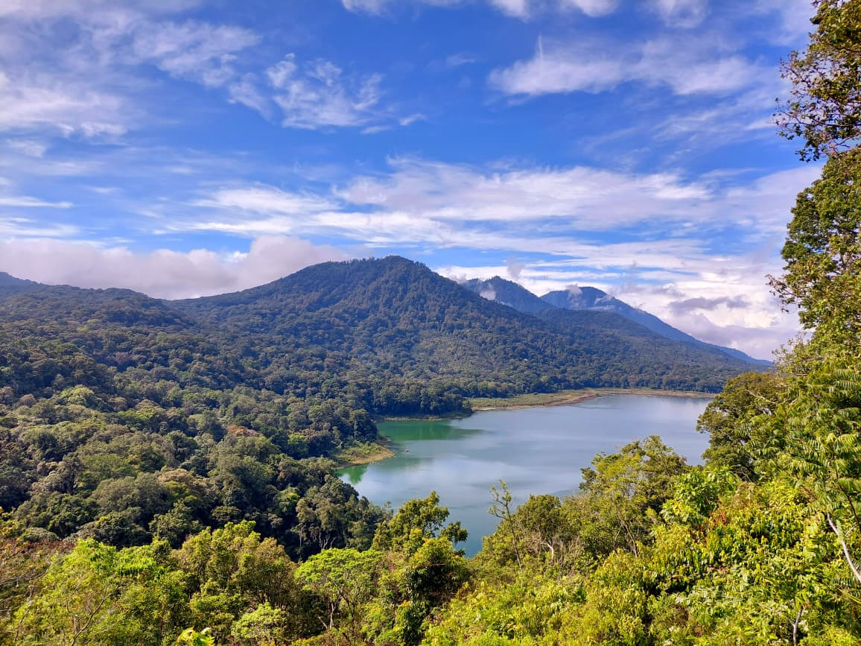
Indonesia’s forests, mountains, peatlands, mangrove stand at the center of a difficult story: they are treasured landscapes that people want to visit, but they are also living systems that must be protected. Ecotourism enters this story as a bridge between conservation and livelihood. By inviting visitors to experience nature responsibly, it creates a way for forests and biodiversity to generate value without being cleared, extracted, or degraded. Admission fees become more than tickets; they become signals that these places have public value and that their protection requires resources, rules, and shared responsibility.
Ecotourism fees can help national parks and conservation areas finance their operational cost, from management, monitoring, infrastructure, and community benefits. For governments, these fees contribute to Non-Tax State Revenue and help close operational financing gaps. For surrounding communities, ecotourism can open alternative livelihoods, diversify household income, support local businesses, and encourage a conservation mindset. In this way, a visitor’s payment can travel through the system: from an entrance gate, into public revenue, back toward conservation programs, and eventually into better protection of landscapes and improved opportunities for local people.
Yet the story is not simple. The same tourism that brings revenue and awareness can also bring pressure to natural resources: waste, pollution, infrastructure pressure, cultural disruption, and uneven visitor flows. Some famous parks receive too many visitors, while other sites remain underused. If ecotourism grows without adequate planning, it can trigger land conversion, migration pressures, habitat fragmentation, and greater demand for timber, fuelwood, and local infrastructure. Therefore, ecotourism presents both an opportunity and a risk: it can protect forests when carefully managed, but it can also weaken them when growth is unregulated.
The policy landscape surrounding this issue is broad. Indonesia already has a strong legal basis for tourism, forestry, conservation, coastal management, local government, and Non-Tax State Revenue. Several ministries share responsibility, including the Ministry of Environment and Forestry, the Ministry of Tourism and Creative Economy, the Ministry of Home Affairs, and the Ministry of Marine Affairs and Fisheries. However, it reveals a recurring challenge: when many institutions hold different pieces of authority, coordination becomes essential. Overlapping mandates, unclear spatial plans, and uncertain land tenure can slow implementation and create different visions for the same landscape.
At the operational level, ecotourism depends on capacity. Social Forestry areas, restoration concessions, national parks, and production forests all offer different pathways for community-based and non-extractive business models. However, tariff-setting, benefit-sharing, technical planning, and revenue redistribution remain uneven or underdeveloped. The document highlights that ecotourism will only reach its potential if local communities are not treated as bystanders, but as partners who help plan, monitor, restore, and benefit from the landscapes they know best.
The opportunities are significant. Demand for nature-based and sustainable tourism is growing, and Indonesia’s natural resources give it a strong position in global tourism. Peatland landscapes, coral reef rehabilitation, turtle conservation, forest monitoring, multi-business forestry permits, and partnerships with private actors and local communities all show how ecotourism can become part of a larger conservation economy. These examples suggest that the future of ecotourism is not only about attracting more visitors but about designing better systems: systems that connect visitor spending with ecosystem restoration, community income, and long-term landscape resilience.
The recommendations therefore point toward a more integrated model. Government planning should connect economic, environmental, and climate objectives across sectors. Local governments and communities should be involved through consultation and participation. National guidelines should better cover production forests, protection forests, restoration concessions, and Social Forestry areas. Revenue mechanisms should be improved so that ecotourism fees more clearly support biodiversity conservation, operational needs, and less-developed conservation units. Pricing should also become more flexible and creative, responding to local carrying capacity, visitor behavior, management costs, and risks of revenue leakage.
Ecotourism fees are not a complete solution on their own, but they can become an important instrument for sustainable landscape management when embedded in strong governance, fair benefit-sharing, community participation, and adaptive pricing. If managed well, ecotourism can turn a visitor’s journey into a contribution: to forests that remain standing, communities that gain new livelihoods, and public institutions that are better equipped to protect Indonesia’s natural heritage.